
One year of SIRIS shoulder – first insights from the national shoulder arthroplasty registry
Since the launch of SIRIS Shoulder on 1 January 2025, followed by mandatory reporting from 1 July 2025, the registry has become successfully established across Switzerland. During its first year, more than 4,500 primary shoulder arthroplasties and over 400 revision procedures were recorded from 123 hospitals and clinics.
The first analyses provide an informative overview of current shoulder arthroplasty practice in Switzerland. Reverse total shoulder arthroplasty now accounts for approximately 90% of all shoulder replacements, reflecting its growing clinical importance. At the same time, modern surgical technologies are increasingly being adopted, with 44% of procedures already incorporating three-dimensional planning or other advanced preoperative planning techniques.
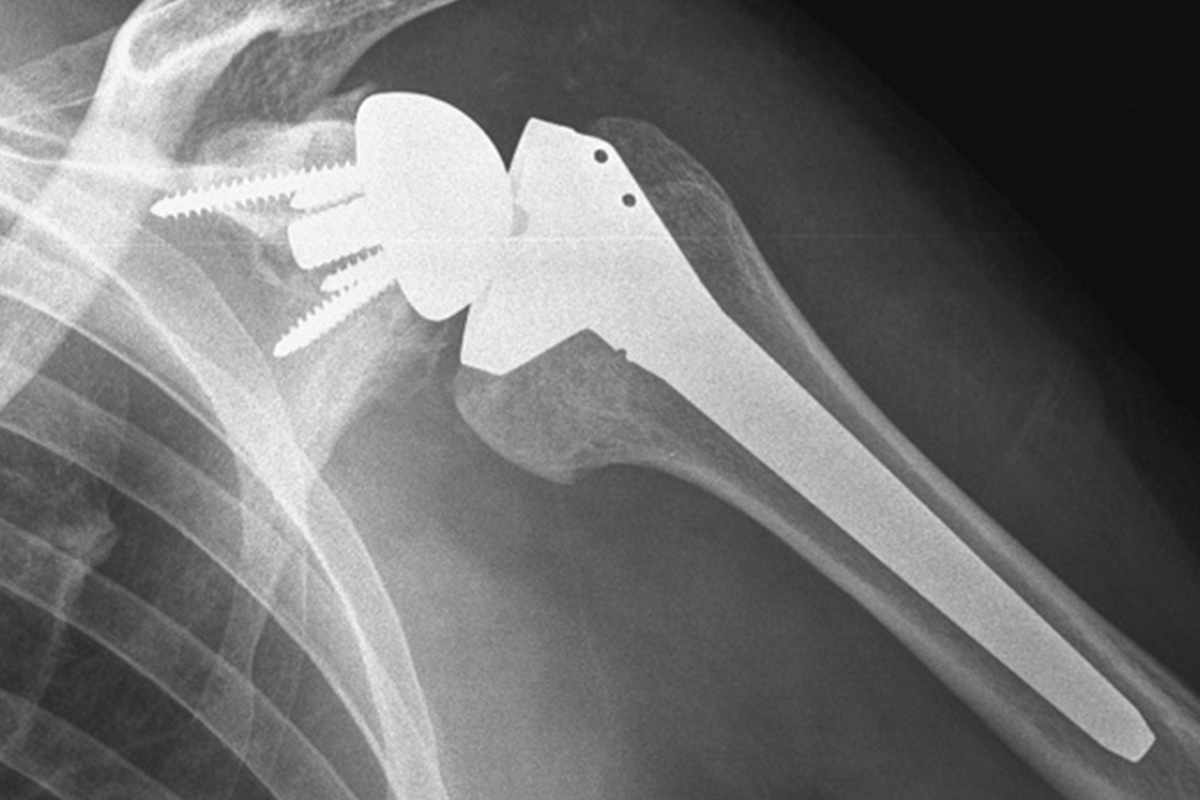
Although the registry is still in its early phase, the data are already providing valuable insights into the quality of shoulder arthroplasty care. Initial analyses of linked revisions indicate that infection and instability are the leading causes of early revision surgery. Furthermore, the preliminary findings suggest that patients undergoing arthroplasty for fractures or rotator cuff-deficient shoulders have a higher risk of early instability.
As data completeness continues to increase, SIRIS Shoulder will enable robust analyses of implant survival, implant-specific outcomes, and patient-related risk factors. The registry therefore represents an important step towards continuous quality improvement and the ongoing advancement of shoulder arthroplasty care in Switzerland.
The first analyses provide an informative overview of current shoulder arthroplasty practice in Switzerland. Reverse total shoulder arthroplasty now accounts for approximately 90% of all shoulder replacements, reflecting its growing clinical importance. At the same time, modern surgical technologies are increasingly being adopted, with 44% of procedures already incorporating three-dimensional planning or other advanced preoperative planning techniques.
Although the registry is still in its early phase, the data are already providing valuable insights into the quality of shoulder arthroplasty care. Initial analyses of linked revisions indicate that infection and instability are the leading causes of early revision surgery. Furthermore, the preliminary findings suggest that patients undergoing arthroplasty for fractures or rotator cuff-deficient shoulders have a higher risk of early instability.
As data completeness continues to increase, SIRIS Shoulder will enable robust analyses of implant survival, implant-specific outcomes, and patient-related risk factors. The registry therefore represents an important step towards continuous quality improvement and the ongoing advancement of shoulder arthroplasty care in Switzerland.
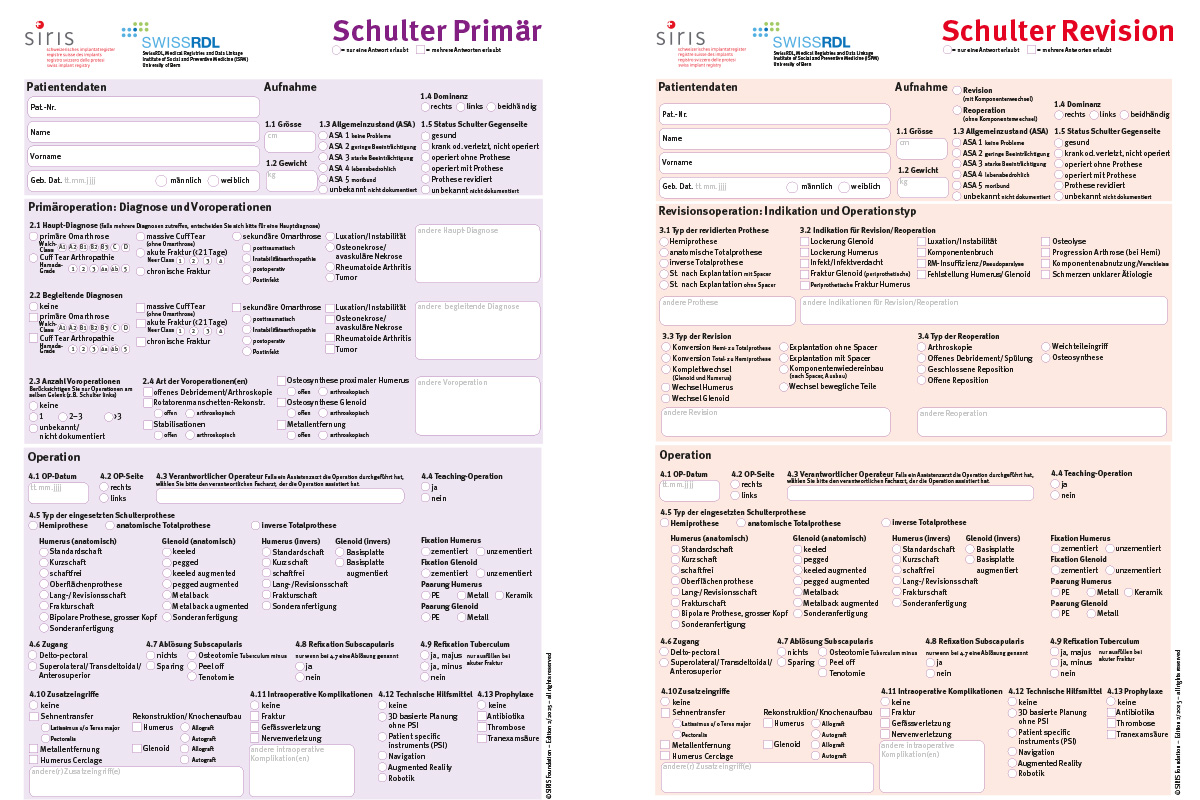
Concept, Forms, and Regulations
For more information and documents for hospitals and clinics, visit: DOWNLOADS